
LTG Group: Bringing AI Into Rail Transformation
When digital transformation reaches the railway sector, it quickly moves beyond software. It reaches tracks, stations, inspection routines, and critical infrastructure. At LTG Group, that means bringing software, data, and AI into the physical realities of rail operations.
LTG Group manages Lithuania’s rail infrastructure, freight, and passenger rail services. With 5,617 employees, 5.9 million customers/passengers per year, and annual revenue of approximately 500 million, it operates at a scale where reliability is non-negotiable and transformation is judged by how well the system works every day.
For Vytautas Bitinas, Chief Technology Officer at LTG Group, that is the starting point. Rail, he says, is now facing the kind of transformation that telecom, banking, and energy went through earlier.
“We are continuously transforming, the question is not whether we change, but how.”
Vytautas Bitinas, Chief Technology Officer, LTG Group
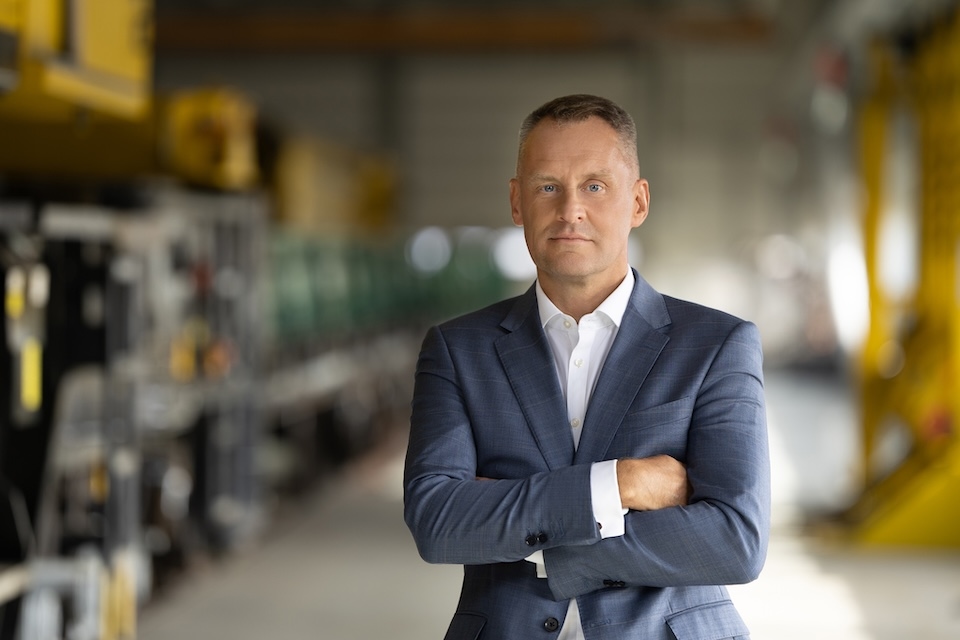
Vytautas Bitinas, Chief Technology Officer, LTG Group
That view comes from the scale of change already underway. LTG is moving through electrification, infrastructure renewal, and growing pressure to operate more efficiently while maintaining critical services. Rail is also gaining new strategic relevance through sustainability goals and military mobility. For Bitinas, this raises the bar for every technology decision: new solutions have to work in a demanding operational environment, not just look promising on paper.
One example is rail infrastructure monitoring. LTG uses a diagnostic train equipped with cameras and sensors to assess track conditions, while AI-supported analysis helps identify anomalies faster and more precisely. Another pilot involves quadruped robots that inspect trains in narrow spaces and collect visual data in all weather conditions.
LTG is also using AI in internal support functions. One example is an assistant that helps employees navigate HR-related policies and documents faster.
“Our modus operandi is to explore, polish the solution, understand exactly what it costs, and what value it creates,” he says. “Only then do we move toward a production decision.”
This discipline also reflects the constraints LTG operates under. Investment decisions have to be weighed carefully, especially in a capital-intensive sector where modernization competes with other strategic priorities, including military mobility and major infrastructure programs. At the same time, the organization must introduce new solutions without disrupting critical operations, while carrying the burden of old Russia-linked systems and building newer Western platforms in parallel.
Together, these realities make LTG’s transformation especially complex. Cybersecurity, governance, and data control shape every discussion, while many projects involve sensors, robotics, communications, and operational technology alongside software. “What problem does this solve? Where do we save? What gets better?” Bitinas says, describing the questions behind each decision.
Over the next three years, LTG plans to expand automation and digital support across the network. Among the areas under exploration are remote support for selected functions in smaller stations and longer-term opportunities related to autonomous rail technologies. “The main goal is to change processes, so they become qualitatively different,” Bitinas says.
Bitinas does not speak about transformation as a slogan, but as a series of decisions, tests, and tradeoffs inside a critical system that has to keep moving. In that respect, LTG’s direction is a practical rethinking of how a modern railway should run.